

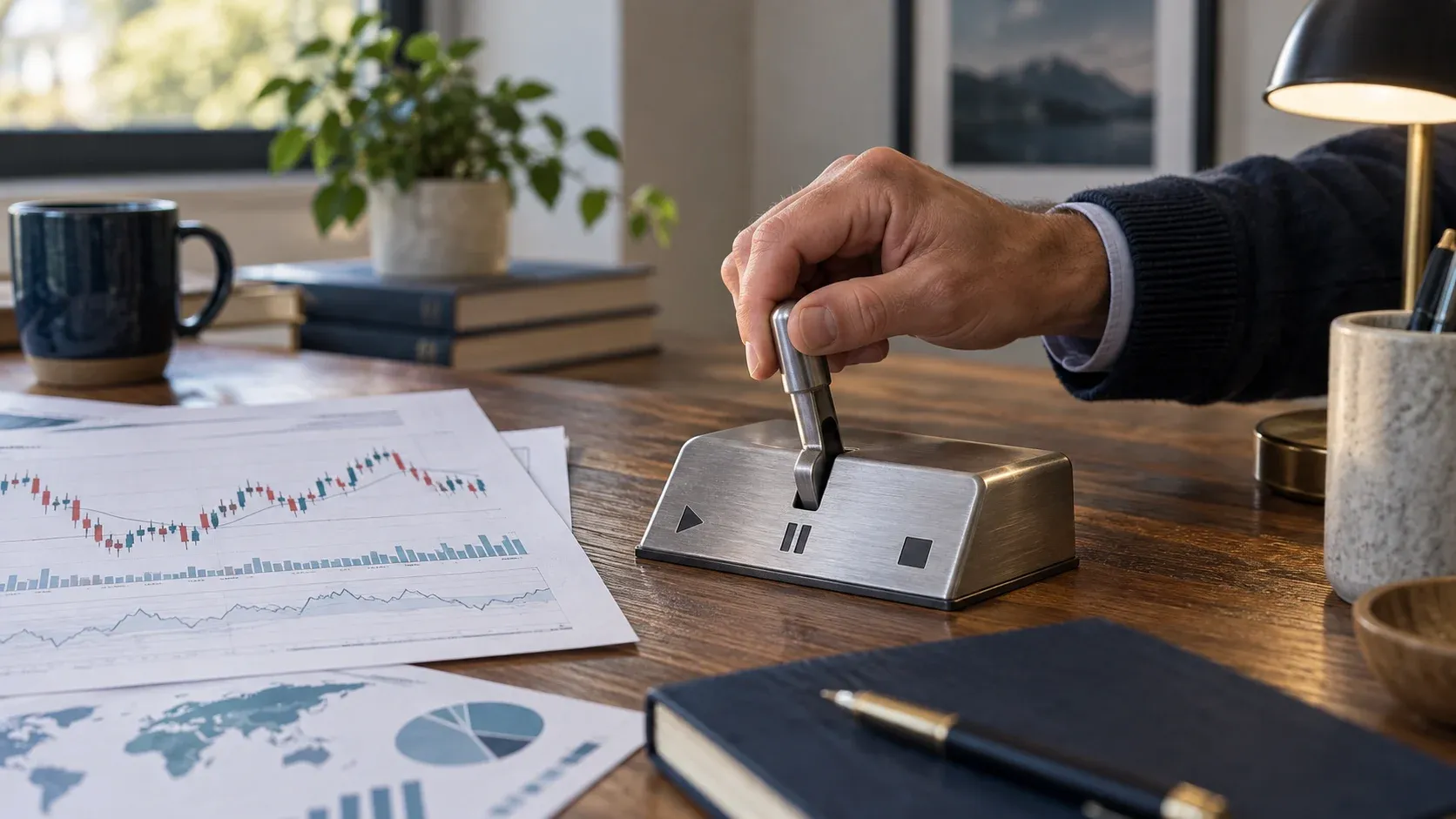

Stopping a copy relationship is not always one action. A platform can separately control whether new provider instructions are copied, whether an existing subscription remains active and what happens to positions already open in the follower account. Treat these as three decisions and confirm each state.
Pause, stop and close are different
Pause commonly suspends future copying while preserving the relationship. Stop or unsubscribe commonly ends future participation. Close positions sends trading instructions for current exposure. The exact labels and behaviour vary, so the secure RockCopy portal and its confirmation screen are the definitive sources for the current workflow.
Future instructions versus existing exposure
A successful pause can prevent eligible new instructions without changing open trades. Ending the relationship can also leave existing positions for the follower to manage. That means market risk, financing, margin use and price movement may continue after future copying has stopped.
Check open positions before you act
Record every copied position, pending order, current size, unrealised result and margin requirement. Separate them from positions you opened independently. If the platform offers more than one exit option, compare whether it affects only future activity, copied positions, pending instructions or the entire connected account.
Review Balance, Equity and Follow Capital Explained before judging how much capital remains exposed.
Choose the control that matches your intent
When a pause may fit
A pause can be useful when you need time to investigate unusual activity, a changed market environment, a connectivity issue or a personal change in risk capacity. It should not be assumed to freeze the value of open positions or guarantee an exit price.
When a full stop may fit
A full stop is appropriate when the original reason for following no longer holds or the relationship should end. Decide separately whether current positions will be closed, managed manually or allowed to run according to a documented plan. Read Past Performance, Strategy Drift and Ongoing Review when the concern is a change in provider behaviour.
Understand manual closes and resynchronisation
Closing a copied trade manually may not disable future copying. Some copying services compare provider and follower positions after reconnecting, restarting or changing account funds, then attempt to synchronise eligible positions again. A position can therefore reappear if the relationship remains active and platform rules permit it.
If your intention is to stop the relationship, change the relationship state first where appropriate, then manage remaining positions and confirm no new instructions are being accepted.
Execution can change the outcome
An exit request is an instruction, not a guaranteed price or completion time. Closed markets, price gaps, limited liquidity, latency, disconnection, rejected volume and abnormal conditions can delay or alter execution. The provider may also trade while your request is processing.
Copy-Trading Execution Gaps, Price Tolerance and Latency explains why follower results can diverge during entry and exit.
A controlled exit sequence
- Identify why you are acting and whether the concern is temporary or permanent.
- Capture the current provider status, positions, pending orders, equity and margin.
- Read the exact effect of each available pause, stop or close option.
- Submit one deliberate instruction through the secure portal.
- Wait for acknowledgement and check account history rather than relying on the button state alone.
- Manage any remaining positions under your own risk plan.
- Recheck after reconnecting or restarting the platform.
Confirm the state afterwards
Verify that the provider relationship shows the intended status, no unexpected instructions are arriving, and all positions and pending orders match your decision. Check available margin and equity again. Keep the confirmation or history record so a later resynchronisation or execution issue can be investigated.
Pausing or stopping copying can reduce future exposure, but it cannot undo market movement that has already occurred. If the interface state is unclear, contact RockGlobal support before assuming the relationship or exposure has ended.