

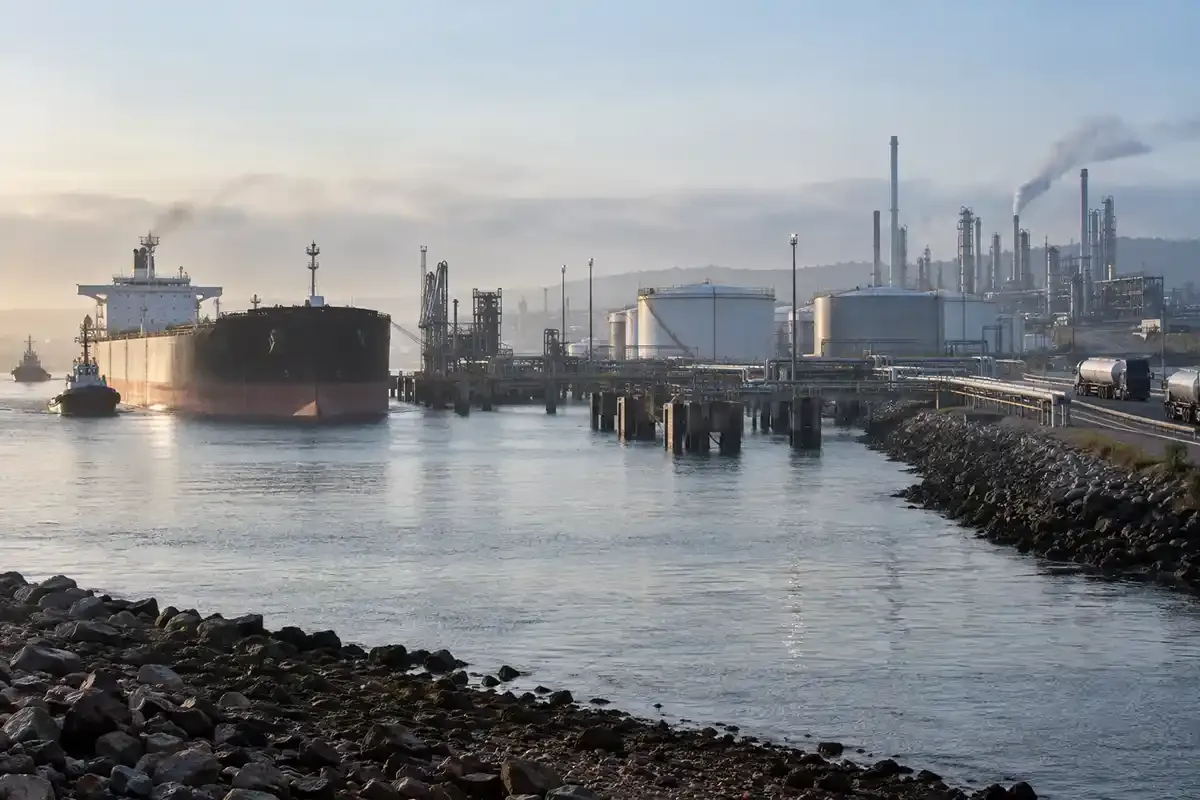

Energy begins as a physical flow. Crude oil, natural gas and refined fuels must be produced, moved, stored, processed and delivered before they can meet demand. A price can therefore change because the total amount of energy changes—or because an existing supply can no longer reach the place, form or time in which it is needed.
The five links in the energy chain
Production
Oil fields, gas wells and processing plants provide the initial supply. Output can change with investment, geology, maintenance, producer policy, weather and operational disruption. A production change matters most when it alters the balance expected for a relevant region and period.
Transport
Pipelines, tankers, railways, ports and terminals connect supply with refineries and consumers. Capacity is not interchangeable: a barrel available inland cannot immediately solve a shortage at a coastal refinery if the route is full or unavailable.
Storage
Tanks, caverns and pipeline systems absorb timing differences between production and consumption. Inventories can cushion a short interruption, but storage has operating limits, location constraints and quality requirements.
Refining and processing
Refineries turn crude into petrol, diesel, jet fuel and other products. Natural-gas processing removes impurities and separates useful liquids. Capacity, maintenance and product yield determine what the system can actually deliver.
End demand
Transport, electricity generation, heating, industry and petrochemicals consume energy in different forms. Economic activity, technology, policy and weather can change both the level and timing of demand.
Why location can matter as much as total supply
Energy is not perfectly mobile. Freight cost, pipeline direction, port depth, sanctions, product specifications and border rules can separate regional prices. A global crude surplus can coexist with a local fuel shortage if the appropriate crude, refinery capacity or delivery route is unavailable.
This is one reason WTI and Brent can move differently. Each benchmark reflects a distinct delivery and trading system as well as shared global forces.
How pressure travels through the chain
Suppose a refinery unexpectedly closes. Its demand for crude may fall, putting downward pressure on nearby crude grades. At the same time, its petrol or diesel output disappears, which can tighten local product supply. If other refineries or imports cannot respond quickly, crude and fuel prices may move in different directions.
A blocked pipeline can create a similar split: supply accumulates upstream while the destination becomes tighter. The price response depends on inventories, alternative routes, expected repair time and the flexibility of producers and users.
Inventories are a buffer, not a complete answer
Stock data show what is held at surveyed points in the chain. A build can indicate that inflow exceeded outflow during the period; a draw can indicate the reverse. Neither result explains the cause by itself. Season, location, product quality, measurement coverage and market expectations all matter.
The companion insight on oil inventories, storage and supply disruption explains how to read that evidence without treating one release as a trading signal.
Expectations and physical confirmation
Markets price anticipated conditions as well as reported conditions. Weather forecasts, producer announcements, shipping data and maintenance plans can change expectations before official production or inventory figures are published. Later data may confirm, revise or contradict the original view.
A useful analysis separates the event, the expected physical transmission and the observed evidence. It also asks whether the effect is temporary, regional or large enough to change the broader balance.
A practical supply-chain checklist
- Name the product and benchmark being analysed.
- Locate production, delivery, storage and refining capacity.
- Identify the constrained link and available alternatives.
- Check inventories in the affected location and product.
- Compare the expected duration with the available buffer.
- Separate crude, refined-product and natural-gas effects.
- Confirm how the relevant CFD references the market.
For the derivative boundary, review Energy CFD foundations. A CFD provides price exposure; it does not provide ownership of the physical infrastructure or commodity.